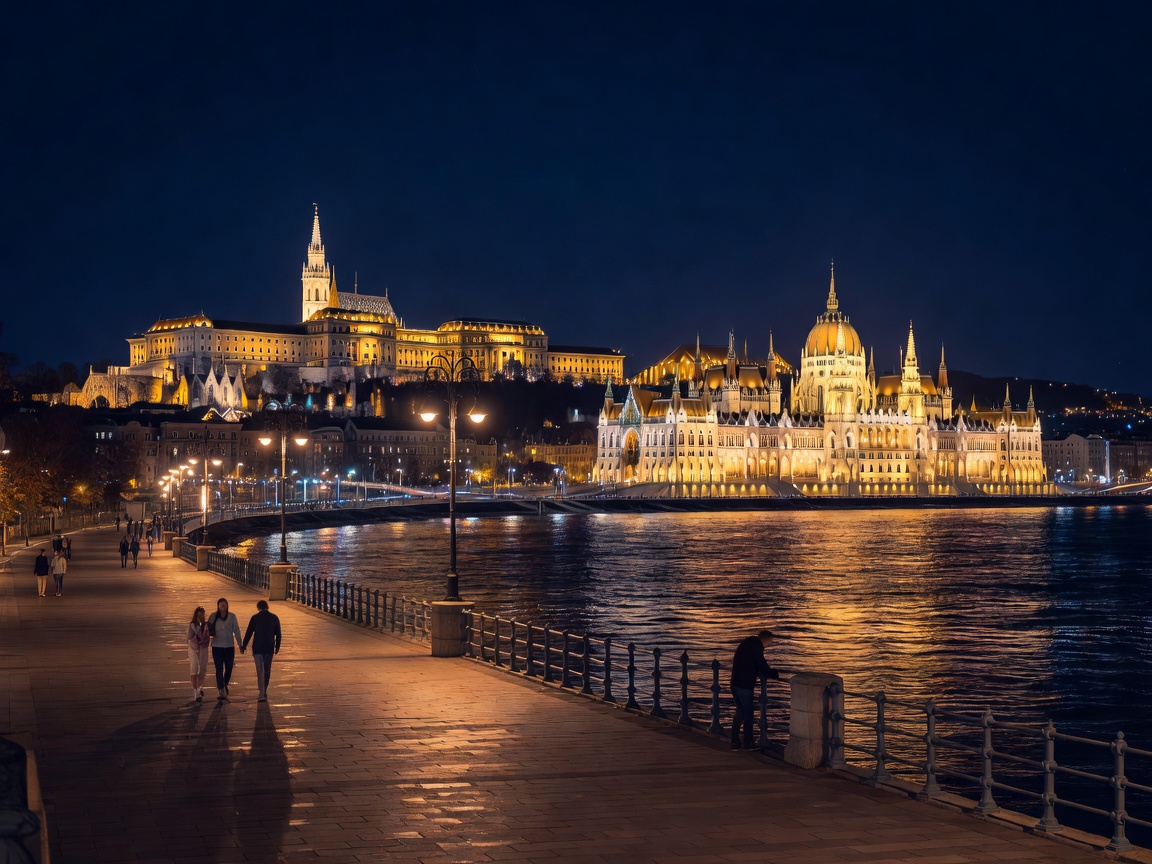
 Memorial
Shoes on the Danube Bank
Sixty pairs of iron shoes, installed in 2005, marking the spot where Jewish Hungarians were shot into the river in 1944–45. Three minutes' walk south of the Parliament, and unmissable.
Free15 min
Home / Destinations / Parliament & the Danube
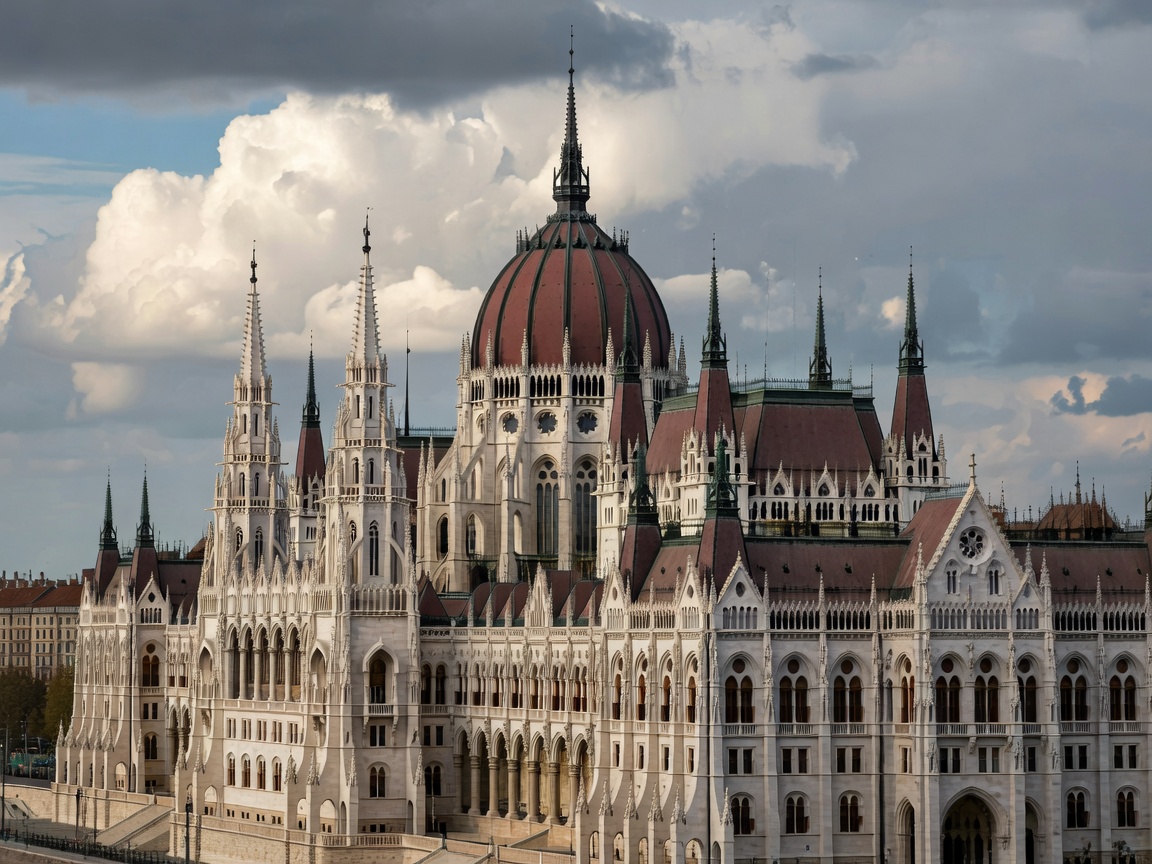
691 rooms, 96 metres of deliberate symbolism and a riverside walk that explains the whole city in forty minutes.
The building
Imre Steindl won the 1880s competition with a Gothic Revival design deliberately scaled to announce that Hungary was an equal partner in the Dual Monarchy, not a province of it. Construction ran from 1885 to 1902 and consumed forty million bricks, half a million precious stones and roughly forty kilograms of gold.
The dome is exactly 96 metres, a number that recurs across Budapest — St Stephen's Basilica matches it, and the M1 metro opened in 1896 — all referencing the traditional date of the Magyar conquest in 896. Height regulations in the centre still discourage anything taller.
Guided visits last around 45 minutes and follow a fixed route: the ceremonial staircase with its 96 steps and Károly Lotz frescoes, the sixteen-sided Dome Hall where the Holy Crown of Hungary is displayed under guard, the old Upper House chamber, and the cigar holders in the lobby where nineteenth-century members parked their cigars during debates. The working lower chamber is not part of the standard route.
Tickets are sold through the official Országgyűlés visitor service and sell out days ahead in summer. EU citizens pay a substantially reduced rate on production of an EU identity document — bring the physical card or passport, not a photo. The entrance is at the Visitor Centre on Kossuth Lajos tér, and you should arrive thirty minutes before your slot for airport-style security. Large bags must be checked; photography without flash is permitted in most rooms but never of the Holy Crown.
Around the building
MemorialSixty pairs of iron shoes, installed in 2005, marking the spot where Jewish Hungarians were shot into the river in 1944–45. Three minutes' walk south of the Parliament, and unmissable.
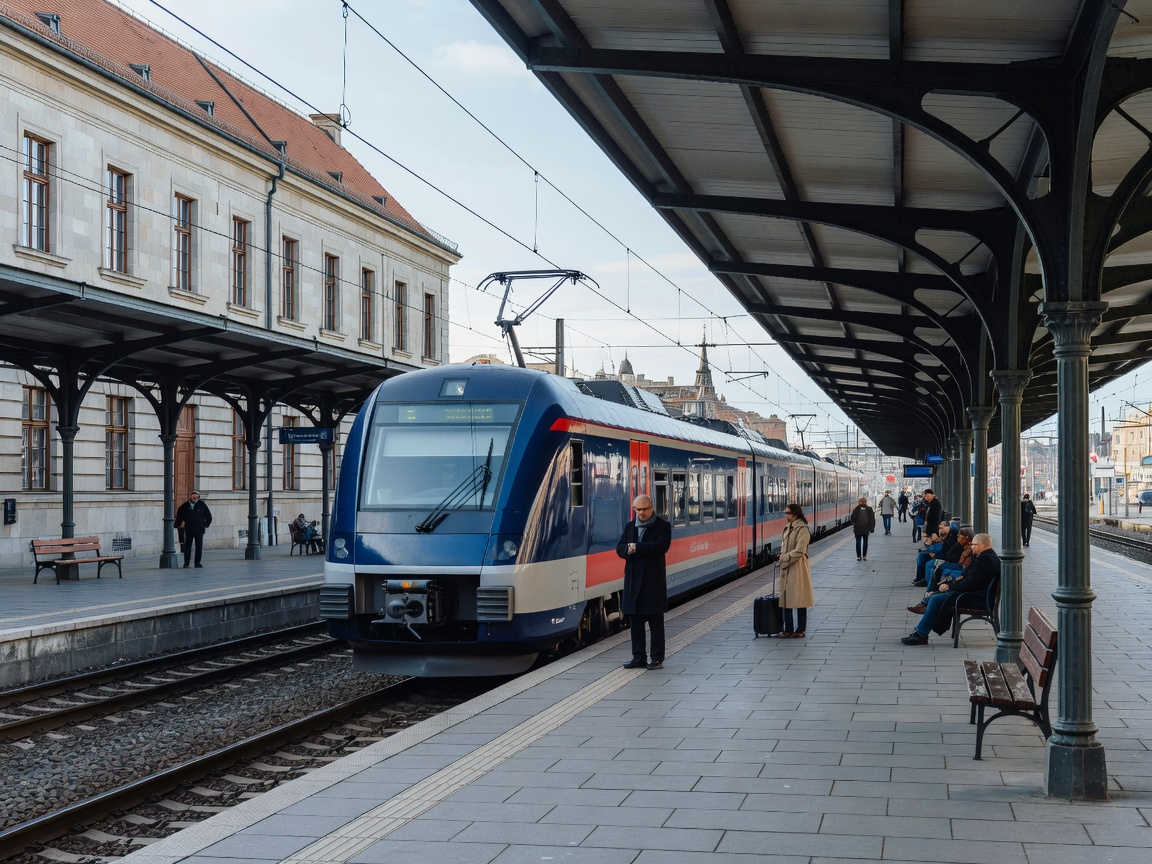 Tram 2
 hugs the Pest embankment from Jászai Mari tér to Közvágóhíd, passing the Parliament, the Chain Bridge and the Market Hall. Covered by any standard ticket.
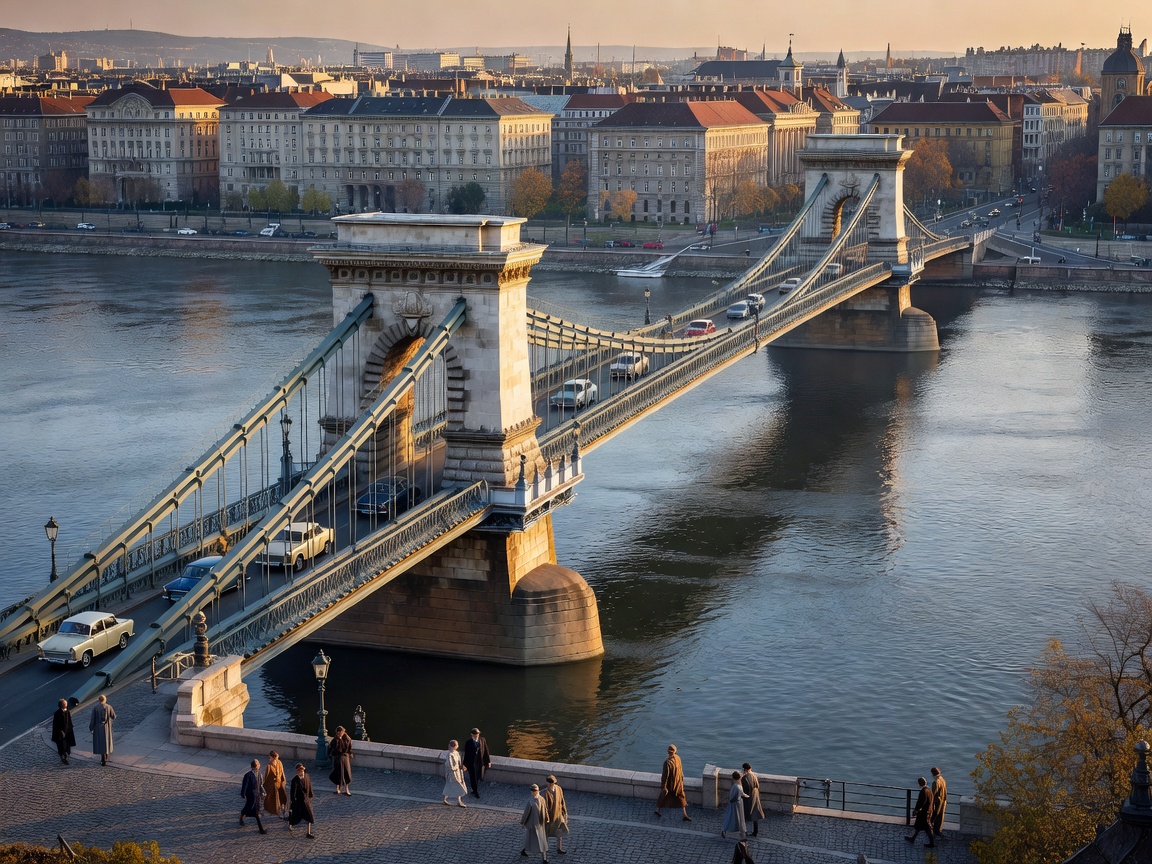 Bridge
Reopened after full restoration, the 1849 Széchenyi Chain Bridge is the natural link from the Parliament walk up to the Castle District and the Bastion viewpoints.
Tickets
| Ticket | Price (HUF) | Notes |
|---|---|---|
| Adult, EU citizen | 4,000 | Photo ID required at entry |
| Adult, non-EU | 13,000 | Includes guided tour in chosen language |
| Student 6–24, EU | 2,000 | Valid student card needed |
| Child under 6 | Free | Must still be registered on the booking |
Indicative 2026 prices. Tours run in Hungarian, English, German, French, Spanish, Italian, Russian and Hebrew. Book via the official Parliament visitor service. Sessions of the National Assembly (usually Mondays) can close the building to visitors.
Questions